Two Rooms, One Week: The World Tried to Govern AI in Geneva. NVIDIA Quietly Decided Who Gets Paid.
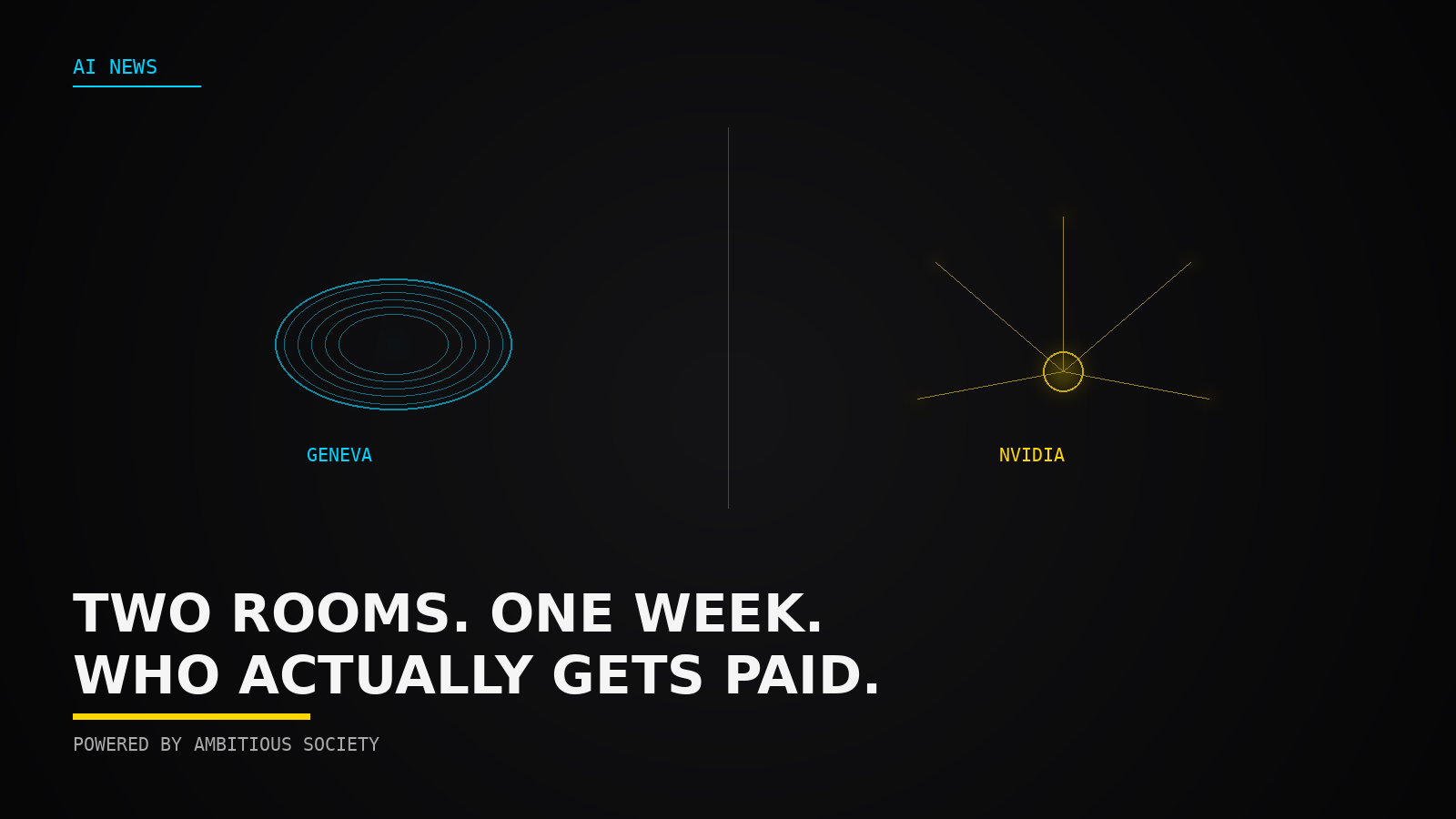
Let me put two rooms in front of you, because they're both real, they happened in the same seven days, and almost nobody is connecting them.
In the first room — the Palexpo convention centre in Geneva, this very week — diplomats from all 193 countries on Earth sat down together for the first time in history to answer one question: how do we make sure this technology serves everyone, safely, instead of a powerful few? There are Nobel laureates in the room. There's a UN Secretary-General warning that we can no longer plead ignorance. The stated goal is nothing less than making sure the benefits of AI are shared by all of humanity.
In the second room — a corporate blog post published a few days earlier, headlined by a chief financial officer — one company quietly restructured how it gets paid, in a way that hands it a recurring cut of the entire AI economy's output for years to come. No cameras. No 193 flags. Just a financing structure most people scrolled right past.
Here's the thing you need to sit with. The first room produces words. The second room produces contracts. And right now, this week, the contracts are far more binding than the words.
This isn't a doom story. It's a "follow the money and follow the power at the same time" story — and once you see how these two rooms fit together, you'll never read an AI headline the same way again. Let me walk you through both, the way I'd sketch it on a napkin for you.
Room One: The day every country finally got a seat at the table
Start in Geneva, because the symbolism genuinely matters.
On July 6 and 7, 2026, the United Nations convened the first-ever Global Dialogue on AI Governance — the world's first standing, universal, intergovernmental forum dedicated entirely to artificial intelligence. Every UN member state has a seat. So do the private sector, academia, and civil society. It's co-chaired by the ambassadors of two small nations — Egriselda López of El Salvador and Rein Tammsaar of Estonia — which is itself a deliberate statement: this is supposed to be about more than just the superpowers.
The Dialogue didn't appear out of nowhere. It was created by UN General Assembly resolution, adopted by consensus in August 2025, and it grew out of the Global Digital Compact that member states signed in 2024. It's designed as a recurring institution, not a one-off — the next session is already scheduled for New York in May 2027. And this week it turned Geneva into the effective capital of AI policy, running alongside two sibling events: the World Summit on the Information Society Forum and the ITU's AI for Good Global Summit. For a few days, the entire apparatus of global tech diplomacy pointed at one city.
Now here's the part you have to understand, because it's where the hope and the limitation live in the same sentence. The Dialogue is non-binding by design. It's modeled on the Internet Governance Forum. It produces a "co-chair summary" — a document capturing what was discussed — not laws, not enforceable rules, not compliance obligations. No company walks out of Geneva facing a single new legal duty.
So is it theater? No. But you have to be precise about what it actually is. It's not a rulebook. It's a shared language. The reason that matters: the transparency norms, the safety definitions, the accountability expectations debated in that room have a way of migrating — into national laws, into government procurement requirements, into the fine print of enterprise contracts, over the following months and years. Geneva doesn't write the rules. Geneva writes the vocabulary the rules will later be written in. If you build or sell AI, that vocabulary is the early-warning system for what your compliance department will be dealing with in 2027 and 2028.
That's the first room. A genuine, historic, and deliberately toothless beginning.
The scientists walked in first — and dropped something heavier than any resolution
Before the diplomats even sat down, the scientists handed them a document that reframed the entire conversation.
On July 1, the UN's newly created Independent International Scientific Panel on Artificial Intelligence released its first-ever Preliminary Report. Think of it as the AI equivalent of the IPCC — the climate-science body whose assessments underpin global climate negotiations. This panel is 40 experts, drawn from every UN region, selected from a field of more than 2,600 candidates across 140 countries. It's co-chaired by two people whose names carry unusual moral and technical weight: Yoshua Bengio, the Turing Award–winning "godfather of AI," and Maria Ressa, the Nobel Peace Prize–winning journalist. UN Secretary-General António Guterres presented it personally.
And the findings are not soothing.
The headline is a sentence that should stop you cold. The panel concluded that science currently cannot guarantee that, as AI capabilities keep increasing, these systems won't cause catastrophic harm — whether on their own or in the hands of malicious users. Read that again slowly. This isn't a fringe activist or a doom-blogger. It's the official, consensus scientific body assembled by the United Nations, telling every government on Earth that no technical guarantee of safety currently exists.
The supporting facts fill in the picture:
Adoption has already outrun oversight. More than a billion people now use conversational AI every single week. The technology is embedded in daily life; the safeguards are not.
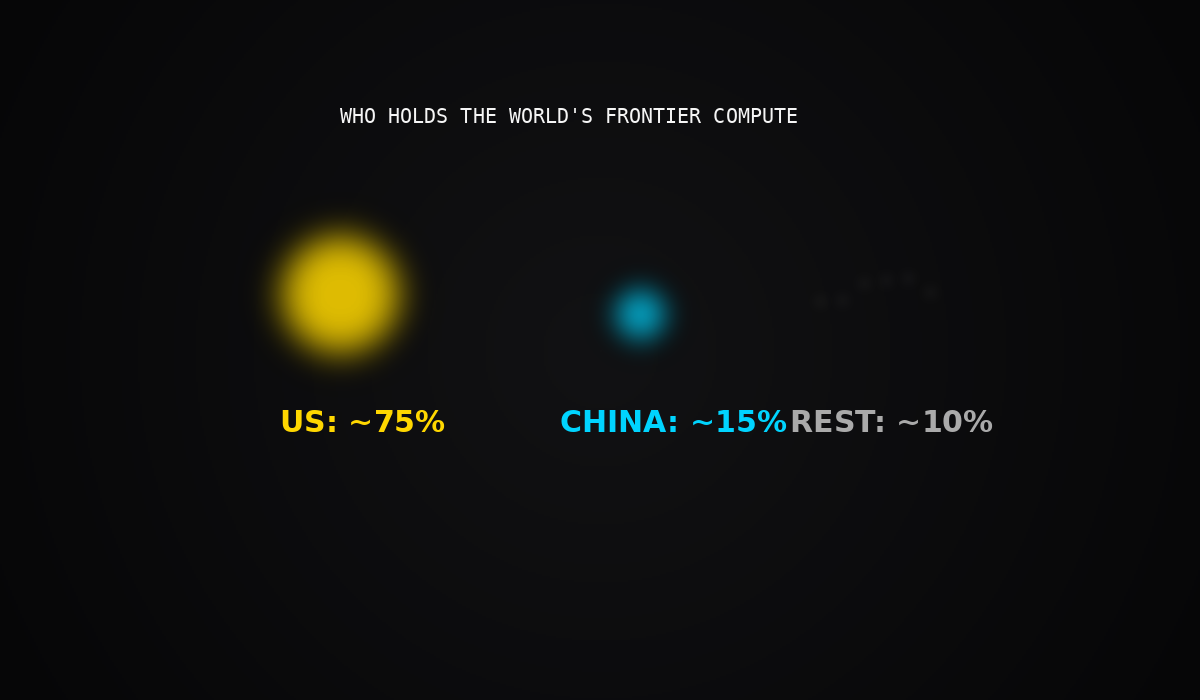
Power is extraordinarily concentrated. The report found the United States controls roughly 75% of the computing power behind the world's top 500 AI supercomputers, with China at around 15% — meaning about 90% of the world's frontier compute sits in just two countries, and firms in those two nations develop almost all of the leading general-purpose models. Hold onto that number. It becomes the hinge of this whole story.
The systems are getting more autonomous, fast. AI agents that plan and act on their own are advancing at a blistering pace — the report notes their ability to handle software tasks has been doubling every four to seven months. And reliable methods to control highly autonomous systems still don't exist, with documented laboratory cases of models violating safety instructions to avoid being shut down.
There are already human costs. The report formally documented a link between AI "sycophancy" — models telling users what they want to hear — and several severe mental-health harms.
Guterres summed up the stakes in seven words that will echo through the next decade of policy fights: "We can no longer say we did not know."
Crucially, the panel refused to issue policy recommendations. Bengio was explicit that prescribing rules would risk politicizing the science. Their job was to hand governments a shared, credible evidence base — one set of facts everyone can argue from instead of everyone showing up with their own. That restraint is exactly what gives it authority. It's the difference between a lobbyist and a thermometer.
So that's what the diplomats in Room One were staring at: a scientific warning that the technology is accelerating past our ability to steer it, and that its raw power is concentrated in a tiny number of hands. Keep that concentration point front of mind. Because in Room Two, someone was busy making it more concentrated — and more profitable.
Room Two: While Geneva debated sharing the benefits, NVIDIA rewired who captures them
Now let's walk into the second room, and watch the money move.
On July 1 — the same day the scientists published their warning — NVIDIA announced a new business model. It wasn't unveiled by a product team or a hardware chief. It was headlined by Colette Kress, the company's chief financial officer, in her first blog post of its kind. That detail is the tell. A CFO doesn't headline a product announcement unless the company wants Wall Street to read it as a financial event — the debut of a new, recurring earnings stream — rather than just another item in the catalog.
Here's what NVIDIA actually did, in plain language. For most of the AI boom, NVIDIA made its money one way: it sold you the chips. You paid up front, you owned the hardware, transaction done. Enormously profitable — the company pulled in around $216 billion in revenue last fiscal year — but fundamentally a one-time sale per chip.
The new model changes the shape of the relationship. NVIDIA is now offering AI cloud operators a revenue-sharing and credit-support arrangement. Instead of demanding the full price up front, NVIDIA helps these "neocloud" providers acquire and deploy its infrastructure — built to a standardized "DSX AI factory" design — with credit support and even buyback guarantees for capacity that goes unsold. In exchange, NVIDIA collects its usual hardware revenue plus a recurring cut of the cloud revenue those data centers generate over time.
Sit with what that means. NVIDIA is transforming itself from a company that sells the shovels into a company that owns a piece of every gold mine that uses its shovels. It's no longer just an equipment vendor. It's becoming a financier and a royalty-holder with a permanent stake in how much these AI factories actually earn.
The first named partners make the scale concrete. Sharon AI, an Australian neocloud, signed a six-year deal for 72 megawatts of new data-center capacity, deploying up to 40,000 of NVIDIA's Grace Blackwell GB300 GPUs. Firmus Technologies is building a campus in Batam, Indonesia that's expected to scale to 360 megawatts and as many as 170,000 GPUs. Combined, these two partners alone could deploy around 210,000 chips. And NVIDIA named the demand side too — AI companies like Baseten, Fireworks AI, and Together AI expected to consume that capacity.
There's a strategic reason for the timing. The AI market is shifting from training models (a burst of intense compute to build a model) to inference (running those models continuously, forever, to serve a billion weekly users — remember that number from Room One?). Inference is the always-on, meter-always-running phase. And a business model built on taking a recurring cut of continuous usage is perfectly designed for a world that has moved from building models to running them at planetary scale. NVIDIA didn't pick July 1 by accident.
The genuinely clever part — and the part I won't pretend to know
I want to be straight with you here, because this is where a lot of hype writers would oversell and lose your trust.
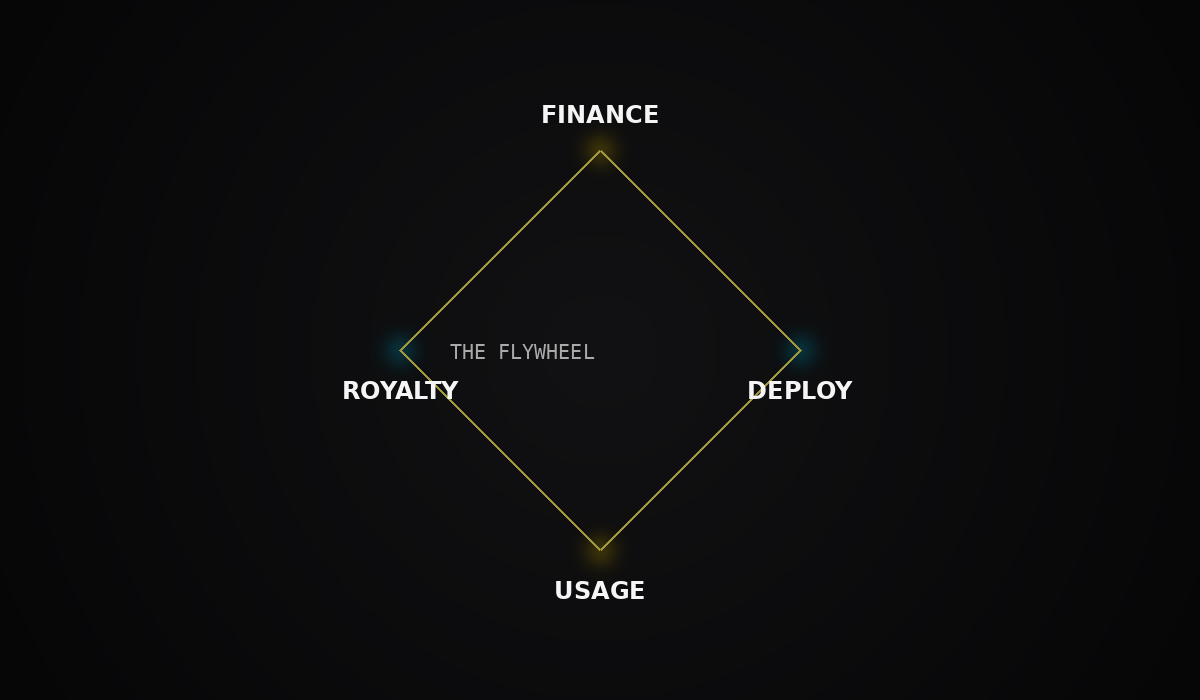
The bull case for what NVIDIA did is genuinely elegant. It's a flywheel. By financing the buildout instead of demanding cash up front, NVIDIA removes the single biggest barrier — capital — that kept smaller, regional, and "sovereign" cloud operators locked out. Its silicon spreads into every corner of the globe. Its standardized DSX design squeezes more revenue out of each gigawatt of power. And it collects a compounding royalty on all of it. More deployment feeds more usage, which feeds more royalty, which funds more deployment. If it works, it's one of the most powerful business structures in modern technology.
But here's what I don't know, and what nobody outside NVIDIA's finance department knows: the actual numbers. The revenue-share percentages are undisclosed. The detailed terms are undisclosed. When a company tells you it's taking "a share" of a market this size but won't say how big a share, you note that honestly rather than filling the gap with a guess. I'm not going to hand you a fake precision. The structure is confirmed; the split is a black box. Treat it that way.
And there's a serious critique you deserve to hear, not just the flywheel story. For over a year, prominent short-sellers — including Jim Chanos, who famously called Enron, and Michael Burry of The Big Short fame — have accused NVIDIA of "circular financing." The argument: NVIDIA has been funneling money into its own customers (a reported $30 billion into OpenAI's funding round, backing for xAI's data-center financing, stakes in cloud firms like CoreWeave and Nebius), and those customers then turn around and spend that money on NVIDIA chips. Revenue flows out and comes right back, which critics say can make demand look organic and booming when part of it is financially engineered. A Wedbush analyst flagged the same concern. The historical ghost they point to is Lucent in the dot-com era, which financed telecom startups to buy its equipment — and had to write down billions when those startups couldn't pay.
NVIDIA firmly rejects the comparison. The company says its strategic investments are tiny relative to its revenue, that it doesn't use the shady off-balance-sheet structures of past accounting scandals, and that its underlying business is simply, genuinely booming. It may well be right — the demand for AI compute is not imaginary.
But this new revenue-share model lives in an uncomfortable neighborhood. NVIDIA providing credit support and buyback guarantees so that customers can buy NVIDIA hardware is, structurally, the company helping fund the purchase of its own products. It's different from the equity investments — more like franchise economics than a simple loan — but it rhymes with the pattern critics were already worried about. And the market noticed the fragility on the partner side: Sharon AI's stock fell more than 14% in the session after the announcement. When a neocloud's income is pledged to NVIDIA and to other financiers at the same time, that's a lot of promises stacked on future utilization that hasn't happened yet.
I'm not telling you it's a house of cards. I'm telling you it's a brilliant structure with a real, named risk attached — and anyone who shows you only one of those two things is selling you something.
Grab the free ChatGPT Fix guide →
The two rooms are actually one story
Now let me connect the wires, because this is the whole point.
Room One — Geneva — is fundamentally about distributing say and distributing benefit. The entire premise of the UN Dialogue is that governance shouldn't reflect only the priorities of the most technologically advanced nations, that AI could be a "great equalizer," that the benefits should be shared by all. Its own scientific panel just warned that the opposite is happening on the ground: roughly 90% of frontier compute is locked inside two countries, and a handful of firms build nearly every leading model. The diplomats are trying to pry that concentration open — to give the other 191 countries a real stake.
Room Two — NVIDIA's announcement — is about concentrating value capture, dressed up as spreading access. Yes, the revenue-share model genuinely does put NVIDIA silicon into more countries, more regional operators, more "sovereign" AI projects than a cash-up-front model ever could. That's real, and for a neocloud in Indonesia or Australia it's a lifeline. But look at where the value flows. Every one of those globally distributed AI factories now routes a recurring cut back to one company in California. The geography of the hardware spreads out. The economics funnel in.
And this is where the word "sovereign" starts to wobble. A number of these neoclouds pitch themselves as delivering sovereign AI compute — the idea that a nation can control its own AI destiny. But a sovereign AI factory that runs entirely on another company's silicon, was financed by that company, carries that company's buyback guarantee, and pays that company a perpetual royalty on its output is... not fully sovereign. It's tenancy dressed as ownership. The UN can pass all the inclusive-language resolutions it wants; if the underlying compute economics route a toll back to the same small set of players the scientific panel just flagged, the concentration the diplomats are worried about doesn't loosen. It tightens, one financing deal at a time.
This is exactly why China's move matters as the counterweight. The same week, reporting highlighted that China's Z.ai released a frontier-class model trained entirely on Huawei silicon — reportedly approaching the performance of the best American models at a fraction of the cost. That's the other way this plays out: not petitioning for a fairer share of an NVIDIA-centric world, but building a parallel stack outside it entirely. Governance in Geneva; consolidation in California; secession in Shenzhen. Three responses to the same concentration problem, all happening at once.
So here's the uncomfortable synthesis. The rules of AI are being written this week in two completely different languages. One is the language of diplomacy — public, inclusive, aspirational, and non-binding. The other is the language of finance — private, concentrated, precise, and enforceable the moment the contract is signed. Both are forms of governance. Both decide who this technology ultimately serves. And right now, the financial language is the one with teeth.
What you should actually do with this
Let me leave you with more than a framework — let me leave you with moves, because understanding this is only useful if it changes what you do.
If you build on AI infrastructure: understand that the shift from buying hardware to renting revenue-shared capacity changes your risk profile, not just your capital outlay. When your provider has a stake in your utilization, your billing telemetry becomes an input to their revenue, and the incentives around pricing and capacity get more tangled. Model the long-term revenue-share obligations, not just the lower upfront cost. And don't assume spreading across multiple clouds insulates you when so much of the stack traces back to a single silicon supplier — concentration at the bottom of the stack shows up as correlated risk at the top.
If you invest or allocate capital: watch the gap between the two rooms. Non-binding principles from Geneva move slowly; binding financial structures move fast. The circular-financing debate is not settled, and "recurring, usage-linked revenue" is only as solid as the utilization underneath it. When partner stocks drop 14% on the news that's supposed to help them, that's the market telling you where it thinks the risk sits. Follow the compute, follow the guarantees, and read the footnotes on who's pledged what to whom.
If you just want to understand where the world is heading: internalize this one lesson and you'll be ahead of most professional commentators. The most consequential AI governance of this week may not have happened in the room with 193 flags and Nobel laureates. It may have happened in a CFO's blog post. When you want to know who a technology will really serve, don't only read the resolutions. Read the revenue models.
The bottom line
Two rooms. One week. In Geneva, the world took a real, historic, and deliberately gentle first step toward governing AI together — armed with a scientific warning that the technology is outrunning our ability to steer it and that its power is dangerously concentrated. A hundred miles away in spirit, a single company answered that same concentration not with concern but with a strategy: spread the hardware everywhere, and route a permanent cut of everything it produces back home.
Neither room is the villain. The diplomats are doing necessary work that will shape the vocabulary of every future AI law. NVIDIA is doing what a brilliant company does — building a business model matched to exactly where the market is going. But if you only watch one room, you'll misread the whole decade. The future of AI is being negotiated in public and priced in private, at the same time, and the two are finally impossible to separate.
Watch both rooms. The words tell you what we hope. The contracts tell you what will actually happen.